
Construction Careers in Saudi Arabia: Roles, Salaries and Requirements
Construction careers in Saudi Arabia can offer professional paths for engineers, project specialists, quantity surveyors, BIM professionals, HSE teams, supervisors, technicians and skilled tradespeople. However, opportunity depends on qualifications, experience, employer demand, project stage, professional registration and current labour-market rules.

Construction Careers in Saudi Arabia: Industry Overview
In addition, Saudi Arabia’s construction sector supports residential, commercial, transport, utility, industrial, hospitality and large development programmes. Consequently, career paths can exist with main contractors, subcontractors, engineering consultancies, developers, project-management firms, EPC contractors, infrastructure companies and facility-management providers.
Moreover, career scope is broad. For example, a graduate may begin in site engineering, estimating or BIM. Meanwhile, an experienced professional may move into construction management, project controls, commercial leadership or project direction. Skilled workers can also progress into lead-worker, foreman and supervisory roles. Nevertheless, project announcements should never be treated as proof of a current vacancy.
Construction Careers in Saudi Arabia: Main Career Paths
Engineering Careers in Saudi Arabia
For example, engineering careers can include civil, structural, mechanical, electrical, MEP, planning, QA/QC and site engineering.
Construction Management Careers
Similarly, project and construction management paths can include project manager, construction manager, project engineer, site manager, planning manager and commercial manager.
Quantity Surveying and Commercial Careers
In addition, commercial pathways can include quantity surveyor, estimator, cost engineer, contracts engineer and commercial leadership.
Architecture & Digital Design
Meanwhile, architecture and digital-design careers can include architect, design engineer, BIM engineer, BIM coordinator and CAD technician.
HSE Careers in Saudi Arabia
For example, HSE careers can include safety officer, HSE officer, HSE engineer, supervisor and HSE manager.
Skilled Construction Careers and Site Operations
In addition, skilled and site-operations careers can include electrician, plumber, carpenter, mason, welder, HVAC technician, scaffolder, operator, foreman and site supervisor.
Therefore, the right path depends on your education, practical ability, certifications, experience and long-term goals. As a result, choose a specialization you can support with real project evidence rather than selecting a title only because it appears popular.

Popular Construction Careers in Saudi Arabia: Roles and Duties
Civil Engineer
Furthermore, civil engineers may work on buildings, roads, utilities and infrastructure. In addition, they review drawings, coordinate site work, resolve technical issues and support inspections. For example, a common progression is Junior Civil Engineer → Site Engineer → Senior Engineer → Construction Manager → Project Manager.
Construction Project Manager
Meanwhile, project managers coordinate schedule, cost, quality, client communication, contractor performance and risk. Therefore, strong planning, reporting and decision-making skills matter alongside technical knowledge.
Construction Manager
Similarly, construction managers focus on site delivery. They coordinate work fronts, manpower, sequencing, productivity, safety and quality while keeping construction aligned with the approved plan.
Site Engineer
In addition, site engineers turn drawings into field execution. For example, typical work includes measurements, technical coordination, subcontractor follow-up, inspections, daily reporting and checking that site activities match approved requirements.
Quantity Surveyor
Moreover, quantity surveyors support cost control through measurement, quantity take-offs, valuations, variations, contracts and commercial reporting. As a result, accurate records and contract awareness are important.
Planning Engineer
Meanwhile, planning engineers build and update project schedules, track progress, review delays and prepare reports. Primavera P6 is common on major projects, although employer requirements differ.
MEP Engineer
Moreover, MEP engineers coordinate mechanical, electrical and plumbing systems, including HVAC and building services. In addition, they often manage technical interfaces between design, installation, testing and commissioning.
HSE Professional
Furthermore, HSE professionals support risk assessments, inspections, toolbox talks, incident prevention, compliance and site monitoring. However, a certificate alone does not replace site competence or safe decision-making.
Skilled Tradesperson
For example, electricians, welders, carpenters, plumbers, masons and HVAC technicians rely heavily on workmanship, practical experience and safety awareness. Therefore, trade tests, recognized certificates and proven productivity can strengthen progression.
Equipment & Site Operations
Similarly, operators, foremen and supervisors keep field activity moving safely and efficiently. In addition, depending on the role, equipment licences, lifting knowledge, site coordination or demonstrated crew leadership may be important.
Construction Careers in Saudi Arabia: Salary Guide
The table below uses broad 2026 editorial market estimates in SAR per month. However, these are not official wage scales or guaranteed salaries. In addition, employer type, city, project complexity, specialization, registration, experience and package structure can move an offer below or above a range.
Indicative Salary Ranges by Construction Role
| Career / Role | Entry / Junior | Experienced | Senior / Management |
|---|---|---|---|
| Civil Engineer | SAR 5,500–8,000 | SAR 8,000–13,000 | SAR 13,000–22,000+ |
| Site Engineer | SAR 5,500–8,000 | SAR 8,000–14,000 | SAR 14,000–22,000+ |
| Structural Engineer | SAR 5,500–9,000 | SAR 9,000–16,000 | SAR 16,000–30,000+ |
| Mechanical Engineer | SAR 5,500–8,500 | SAR 8,500–14,000 | SAR 14,000–24,000+ |
| Electrical Engineer | SAR 5,500–9,000 | SAR 9,000–15,000 | SAR 15,000–25,000+ |
| MEP Engineer | SAR 6,000–9,500 | SAR 9,500–16,000 | SAR 16,000–28,000+ |
| Planning Engineer | SAR 6,500–10,000 | SAR 10,000–17,000 | SAR 17,000–27,000+ |
| QA/QC Engineer | SAR 5,000–8,000 | SAR 8,000–14,000 | SAR 14,000–25,000+ |
| Quantity Surveyor | SAR 5,500–9,000 | SAR 9,000–16,000 | SAR 16,000–25,000+ |
| Safety Officer | SAR 4,000–6,500 | SAR 6,500–10,000 | SAR 10,000–16,000+ |
| HSE Engineer | SAR 5,500–9,000 | SAR 9,000–15,000 | SAR 15,000–24,000+ |
| BIM Engineer | SAR 5,000–8,000 | SAR 8,000–13,000 | SAR 13,000–20,000+ |
| Construction Manager | SAR 11,000–18,000 | SAR 18,000–30,000 | SAR 30,000–45,000+ |
| Project Manager | SAR 11,000–18,000 | SAR 18,000–30,000 | SAR 30,000–45,000+ |
| Foreman | SAR 3,500–5,500 | SAR 5,500–8,000 | SAR 8,000–12,000+ |
| Electrician / HVAC Technician | SAR 2,500–4,500 | SAR 4,500–7,000 | SAR 7,000–10,000+ |
| Heavy Equipment Operator | SAR 3,000–5,000 | SAR 5,000–7,500 | SAR 7,500–11,000+ |
How to Compare Construction Salary Packages
For clarity, compare the definition of “salary” in each offer. Some employers quote basic salary, while others quote monthly cash including fixed allowances.
What Affects Salaries for Construction Careers in Saudi Arabia?
Years of experience matter, but they are only one factor. For example, specialist design responsibility, major-project delivery, commercial exposure, digital construction skills, professional registration and leadership can affect market value. In addition, employers may place extra value on GCC experience, BIM, Primavera P6, contract administration, client coordination or difficult-to-find technical knowledge.
Location can also influence a package. Furthermore, remote project work may use different allowances from a city-based office role. Therefore, compare the full scope, working pattern and benefits rather than comparing job titles alone.
Qualifications for Construction Careers in Saudi Arabia
Engineering careers
For example, relevant degrees may include civil, structural, mechanical, electrical, architectural or construction engineering. However, exact degree requirements depend on the position.
Project management
In addition, an engineering or construction-management background plus delivery experience is common. Moreover, relevant project-management certification can support progression.
Quantity surveying
Similarly, quantity surveying, civil engineering, construction management or commercial management can be relevant. In addition, cost-control and contract experience can strengthen this path.
Architecture & BIM
Meanwhile, architecture, architectural engineering and digital-design backgrounds can combine with AutoCAD, Revit, BIM and coordination skills.
Skilled trades
For example, vocational qualifications, apprenticeships, trade certificates, practical competency and operator licences can be more important than an academic degree.
General site careers
In addition, some site roles rely strongly on practical experience, safety awareness, trade ability and employer testing. Therefore, formal academic qualifications are not required for every site position.
Certifications for Construction Careers in Saudi Arabia
Useful credentials can include PMP, Primavera P6 training, NEBOSH, IOSH, OSHA-related safety training, AutoCAD, Revit, BIM credentials, quantity-surveying qualifications, welding certifications, operator licences, scaffolding certification, first aid and QA/QC training. However, relevance matters more than quantity.
Saudi Council of Engineers Registration for Construction Careers in Saudi Arabia
Moreover, engineering professionals should check the current requirements of the Saudi Council of Engineers (SCE). In addition, the Council’s professional-accreditation framework covers engineering practice, qualification review, professional grading and related registration services. In addition, some technical categories have their own registration routes.
Because categories, document requirements and procedures can change, verify your exact profession directly with SCE and your employer. Moreover, depending on the case, applicants may need academic records, identification, qualification verification and other supporting documentation.
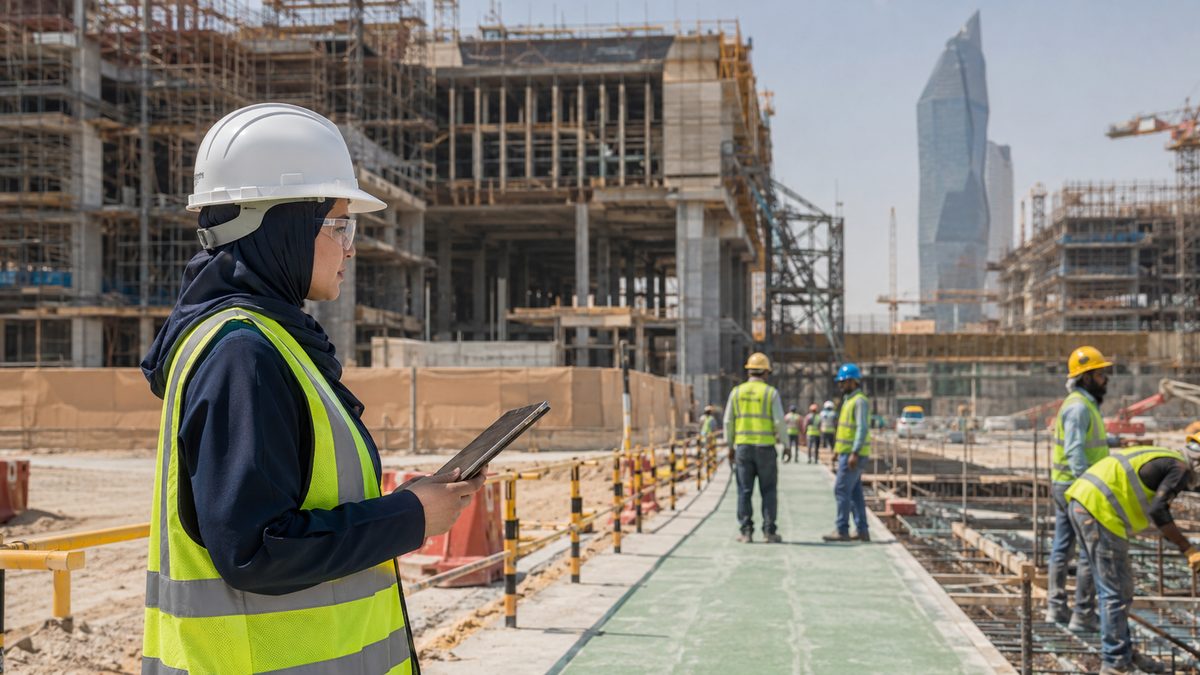
Skills for Construction Careers in Saudi Arabia
- AutoCAD, Revit and BIM
- Primavera P6 or MS Project
- Quantity take-off and cost estimation
- Construction drawings and surveying
- QA/QC and HSE procedures
- MEP coordination
- Contract administration
- Progress reporting and project controls
- Communication and teamwork
- Leadership and supervision
- Problem solving and decision making
- Reporting and attention to detail
- Negotiation and commercial awareness
- Time management
- Client and stakeholder coordination
- Safety awareness
Furthermore, senior construction careers usually require both technical credibility and the ability to lead people, manage risk and communicate clearly.
Construction Careers in Saudi Arabia by Experience Level
Therefore, Entry level: Graduate engineer, junior site engineer, junior quantity surveyor, BIM technician and junior planner are common starting points. However, internships, trainee programmes and project exposure can help fresh graduates turn academic knowledge into site competence.
For example, Early career: Professionals with roughly two to five years of relevant experience often deepen one discipline and begin owning work packages, inspections, reporting or coordination tasks.
Meanwhile, Mid-career: Senior engineer, project engineer, senior quantity surveyor, HSE engineer, planning engineer and QA/QC engineer roles generally require stronger independent judgment and project evidence.
In addition, Senior level: Construction manager, project manager, commercial manager, planning manager, HSE manager and project director positions add leadership, commercial, client and risk responsibilities. However, experience expectations vary by company and project.
Construction Careers in Saudi Arabia for Foreign Professionals
Moreover, foreign professionals and skilled workers may find opportunities in engineering, project management, quantity surveying, planning, BIM, HSE, skilled trades, equipment operation and supervision. However, availability depends on specialization, employer needs, project demand, work-permit classification, professional registration and current Saudization requirements.
Therefore, international applicants should verify the exact occupation rather than assume every construction title is open to foreign recruitment. In addition, for broader guidance, see Saudi Arabia jobs for foreigners and the guide to in-demand careers for expats.
Work Visa Requirements for Construction Careers in Saudi Arabia
At a high level, a foreign construction professional normally needs a valid passport, a Saudi employer, the correct employment authorization, a written employment arrangement and the related work-permit and residence procedures. Depending on the profession, medical checks, qualification verification or professional registration may also apply.
Work Permit and Occupation Checks
In addition, the Saudi Ministry of Human Resources and Social Development states that non-Saudi workers must have the required work permit and work under the responsibility of an employer. It also requires the profession to match the work permit unless the prescribed process is followed to change it. Therefore, review current rules through the Ministry of Human Resources and Social Development, the official Saudi visa channels and your employer.
Construction Careers in Saudi Arabia: Key Sectors
For example, construction careers can appear across residential and commercial buildings, roads, highways, rail, airports, industrial construction, energy infrastructure, utilities, water systems, tourism, hotels, resorts, hospitals, schools, logistics facilities, data centres and mixed-use developments. Moreover, each sector needs a different mix of design, construction, commercial, safety, planning and operations capability.
Meanwhile, demand changes with the project cycle. For example, design teams can be strongest earlier, while site engineering, HSE and supervision grow during delivery. Later, commissioning, handover and facility-management skills become more important.
Saudi Vision 2030 and Construction Careers in Saudi Arabia
For example, Saudi Vision 2030 supports economic diversification and includes broad themes linked to infrastructure, urban development, housing, tourism, transport and industrial growth. As a result, these programmes can influence the kinds of construction and engineering capabilities employers need over time.
However, national development plans do not guarantee an individual vacancy. Therefore, professionals should verify the active project phase, contractor, role requirements and current recruitment status rather than treating a project announcement as a hiring notice. Furthermore, readers can review current reports on the official Saudi Vision 2030 website.
Construction Careers in Saudi Arabia: Major Locations
Riyadh
In addition, urban infrastructure, commercial development, housing, transport and large capital-city projects can create varied construction career paths.
Jeddah
Moreover, commercial and residential work, tourism, transport and infrastructure can require engineering, project and site teams.
Eastern Province
Furthermore, industrial, energy, petrochemical-related infrastructure, utility and commercial projects can favor technical and EPC experience.
NEOM region
Large-scale development can require specialist capabilities, although hiring depends on project phases, contractors and current budgets.
Western & Red Sea areas
For example, tourism, hospitality, infrastructure and destination developments can support project-based construction careers.
Industrial cities & remote sites
Technical roles may also appear around industrial, utility, logistics and energy projects outside major city centres.
Employer Types for Construction Careers in Saudi Arabia
For example, construction professionals can work for main contractors, specialist subcontractors, developers, engineering consultancies, project-management consultancies, EPC contractors, infrastructure companies, industrial organizations, facility-management firms and government-linked project organizations. In addition, each employer type can build different strengths. For example, a consultant may deepen design or supervision skills, while a main contractor may offer stronger site-delivery experience.
How to Build Construction Careers in Saudi Arabia
- Choose a clear specialization that matches your education and experience.
- Build strong technical fundamentals and learn the software used in your field.
- Gain relevant project exposure and keep records of what you personally delivered.
- Earn certifications that support your actual career path.
- Improve communication, reporting and coordination skills.
- Create a focused construction CV and professional LinkedIn profile.
- Build a career portfolio without sharing confidential employer material.
- Follow reputable employers and maintain professional industry connections.
- Continue learning as standards, digital tools and construction methods evolve.
How to Improve Your CV for Construction Careers in Saudi Arabia
First, a strong construction CV should quickly show your professional title, years of experience, specialization, project types, responsibilities, software skills, certifications, professional registration and current location. In addition, include technical achievements and leadership responsibilities when they are relevant.
Quantify work where you can do so honestly. For example, instead of writing “Worked on construction projects,” explain the scope: “Coordinated civil site activities for a multi-building residential development and tracked daily subcontractor progress.” Nevertheless, never invent project values, achievements or responsibilities.
In addition, read engineering careers in Saudi Arabia.
Building a Portfolio for Construction Careers in Saudi Arabia
For example, a career portfolio can include a project list, project type, role, responsibilities, project duration, software used, technical achievements, certifications and training. Moreover, designers and BIM professionals may include selected drawings or model images where disclosure is permitted.

Construction Careers in Saudi Arabia: Progression Examples
However, actual progression varies by company, project exposure, qualifications, performance and opportunity. Therefore, use these paths as examples rather than fixed rules.
Moving into Management in Construction Careers in Saudi Arabia
Moreover, engineers and technical specialists who want management careers should develop leadership, project planning, budgeting, communication, commercial awareness, contracts, risk management, stakeholder coordination and team supervision. Technical excellence creates credibility; however, senior managers must also make decisions across cost, programme, people and client priorities.
Emerging Skills for Construction Careers in Saudi Arabia
Furthermore, BIM, digital project management, construction data analysis, digital twins, sustainability, energy efficiency, modular construction, automation, smart-building systems and modern project controls are becoming more visible across complex projects. Nevertheless, not every employer requires every technology.
Therefore, learn digital tools that solve real problems in your discipline. A planner may gain more value from strong data and schedule analysis, while a BIM professional may focus on coordination, model information and common-data-environment workflows.
What to Check Before Accepting a Construction Career Opportunity
- Exact job title
- Basic salary
- Allowances
- Working hours
- Overtime terms
- Project location
- Accommodation
- Transportation
- Food allowance
- Medical insurance
- Annual leave
- Air ticket policy
- Probation period
- Contract duration
- Notice period
- Visa responsibility
- Professional registration responsibility
- End-of-service terms
- Reporting line
- Career progression opportunities
Review the Written Employment Contract
Review the written employment contract carefully because verbal promises can be difficult to prove later. However, for a deeper checklist, see the guide to the Saudi Arabia employment contract and the current Saudi Arabia salary guide.
Avoiding Recruitment Scams in Construction Careers in Saudi Arabia
First, verify the employer independently through its official website and contact details. Next, confirm the recruiter or agency where appropriate. In addition, use official visa and labour channels to confirm employment procedures. Finally, keep copies of written communication and never treat a social-media message as sufficient proof of a genuine offer.
Are Construction Careers in Saudi Arabia Right for You?
For example, the potential advantages include exposure to large projects, international experience, technical specialization and progression into supervisory or management work. On the other hand, construction can involve site-based conditions, long project hours, remote locations, deadline pressure, hot weather and movement between projects.
Therefore, assess the role itself—not only the salary. In addition, consider the project location, working pattern, accommodation, management responsibility, learning value and long-term fit with your profession.
FAQs About Construction Careers in Saudi Arabia
What are the main construction careers in Saudi Arabia?
For example, major paths include civil and MEP engineering, project management, quantity surveying, planning, BIM, QA/QC, HSE, architecture, skilled trades, equipment operation and site supervision.
Which construction career pays the highest salary in Saudi Arabia?
Senior construction managers, project managers, commercial leaders and project directors can reach higher salary bands, although specialization, employer, project scale and benefits make a large difference.
Can foreigners build construction careers in Saudi Arabia?
Yes, some employers recruit qualified foreign professionals and skilled workers. However, eligibility depends on the occupation, employer demand, work authorization, professional registration and current localization rules.
What qualifications are required for construction careers?
Professional engineering and management roles commonly require relevant degrees, while skilled trades may rely more on vocational training, trade certification, licences and demonstrated practical competence.
Do engineers need Saudi Council of Engineers registration?
Therefore, engineering professionals should verify the current SCE requirements for their category. For example, SCE professional accreditation applies to covered engineering practice, and document requirements can differ by classification.
Is GCC experience required for construction careers?
No. However, However, relevant GCC or Saudi project experience can help when an employer needs familiarity with regional project delivery, standards, climate or client practices.
Which construction certifications are most useful?
The answer depends on the career. PMP can support project management, Primavera P6 supports planning, NEBOSH or IOSH can support HSE paths, while Revit and BIM credentials can support digital-construction roles.
Can fresh graduates start construction careers in Saudi Arabia?
Yes, graduate and junior roles exist, but competition and localization can affect availability. Furthermore, internships, trainee programmes, software skills and relevant project exposure can strengthen a graduate profile.
Which Saudi cities offer construction career opportunities?
For example, Riyadh, Jeddah and the Eastern Province are major centres. In addition, industrial cities and large project locations can create specialized demand depending on the project phase.
How can I progress from engineer to construction manager?
Build strong site-delivery experience, then strengthen planning, leadership, budgeting, reporting, contracts, risk management and team coordination. However, management progression normally requires broader responsibility, not only technical skill.
Construction Careers in Saudi Arabia: Final Takeaways
Finally, construction careers in Saudi Arabia cover a wide range of professional, technical and skilled pathways. In addition, engineering, project management, commercial, BIM, planning, HSE and site operations can all lead to long-term development when the role matches your qualifications and experience. However, salary, registration and foreign-worker eligibility vary by employer, occupation and project.
Therefore, identify a clear specialization, strengthen the technical and professional skills that support it, prepare a focused CV and portfolio, and verify current Saudi regulations before making a career move. Most importantly, review every employment contract carefully and use reputable employers and official channels when assessing an opportunity.
Editorial Sources and Further Reading
- Saudi Ministry of Human Resources and Social Development — labour regulations, work permits and employment guidance.
- Saudi Council of Engineers — professional accreditation and engineering-practice requirements.
- Saudi Visa Platform — official visa services and information.
- Saudi Vision 2030 — official national development reports and programmes.
Editorial note: salary figures are broad market estimates for career planning, not official government rates. However, regulations, localization rules, visa processes and professional requirements can change. Last reviewed 26 August 2026.
Related articles

How to Answer “Why Should We Hire You?” With Real Examples
Learn how to answer 'Why should we hire you?' with a practical three-part formula, 12 realistic role-specific examples…
By Gulf Career Group · 21 min read
How to Improve English Speaking Confidence for Job Interviews
Improve English speaking confidence for job interviews with practical speaking exercises, truthful sample answers, workplace vocabulary, and a…
By Gulf Career Group · 20 min read
How to Handle Questions When You Don’t Know the Answer in an Interview
Don't know the answer in an interview? Learn what to say, when to ask for clarification, and how…
By Gulf Career Group · 18 min read
STAR Interview Method Explained: 15 Questions with Sample Answers
Learn the STAR interview method with 15 fictional sample answers for teamwork, problem-solving, accounting, IT and more. Practise…
By Gulf Career Group · 24 min read