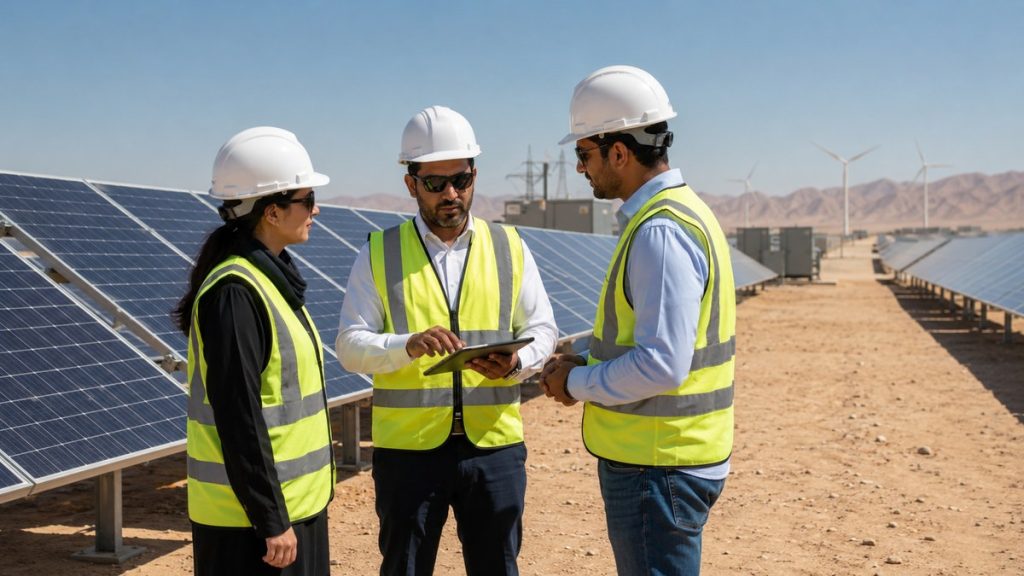
Renewable Energy Jobs in Saudi Arabia: Careers, Salaries and Requirements
Renewable energy hiring in Saudi Arabia is tied to solar, wind, storage and the construction or operation of those projects. A page of career background is not itself a vacancy: hiring still depends on the project stage, the employer, localization rules and the candidate’s experience. Roles commonly sought by developers, EPC contractors, utilities and operations contractors include engineering, construction, safety and project support.
This guide explains career paths, qualifications, useful skills, salary-package checks, options for foreign applicants, CV and interview preparation, and safer ways to search for work.
Renewable Energy Jobs in Saudi Arabia: Industry Overview
Saudi Arabia has long been associated with conventional energy. However, the electricity and infrastructure landscape is becoming more diverse. In addition, solar PV is a major focus, while wind, energy storage, green hydrogen and grid modernization are also part of the broader transition. As a result, this creates demand for people who can design, build, commission, operate and maintain new assets.
Moreover, Saudi Vision 2030 emphasizes economic diversification and the development of new technical capabilities. Therefore, employers increasingly value skills that connect traditional engineering with renewable-power systems, digital controls, project delivery and safety. Nevertheless, candidates should avoid assuming that every announced project is currently recruiting.
Why Renewable Energy Careers Are Growing in Saudi Arabia
Several activities are expanding the skills needed across the energy sector. For example, utility-scale solar developments require design, civil works, substations, cabling, testing and O&M teams. Meanwhile, wind projects add mechanical, electrical and environmental requirements. In addition, battery storage creates demand for controls, power-electronics and grid-integration knowledge.
Similarly, green hydrogen can create roles in process, chemical, electrical and mechanical engineering. In addition, energy-efficiency programs, sustainability reporting and building-energy management may support non-generation careers. Consequently, the market is broader than solar installation alone, although actual vacancies depend on employer schedules and project awards.
Major Renewable Energy Sectors Hiring in Saudi Arabia
Solar Energy
For example, solar work can include utility-scale PV, rooftop systems, design engineering, installation, electrical testing, commissioning and operations. Common roles include solar PV engineer, electrical engineer, site engineer and technician.
Wind Energy
Meanwhile, wind projects need electrical systems specialists, mechanical maintenance teams, project-development staff, civil engineers and environmental professionals. Site conditions can require strong safety and field-work capability.
Green Hydrogen
Similarly, hydrogen projects may require process engineers, electrolyzer specialists, mechanical and electrical engineers, instrumentation professionals, project controls and operations personnel.
Energy Storage
In addition, battery projects create work around electrical design, controls, protection systems, SCADA, commissioning, thermal management, maintenance and grid integration.
Energy Efficiency & Sustainability
Finally, energy auditing, building-energy management, environmental performance, sustainability reporting and selected ESG-related roles can suit engineers, analysts and environmental specialists.
Top Renewable Energy Jobs
| Job Role | Main Responsibilities | Typical Qualification | Experience Level |
|---|---|---|---|
| Renewable Energy Engineer | System studies, design support, technical evaluation | Energy, electrical or mechanical engineering | Junior to senior |
| Solar PV Engineer | PV design, layouts, yield review, technical coordination | Electrical or renewable-energy engineering | Junior to mid-level |
| Electrical Engineer | Power systems, protection, cabling, testing | Electrical engineering | Junior to senior |
| Mechanical / Civil Engineer | Structures, foundations, equipment and site works | Mechanical or civil engineering | Junior to senior |
| Project Engineer | Technical coordination, progress tracking, interfaces | Relevant engineering degree | Mid-level |
| Project / Construction Manager | Delivery, contractors, schedule, cost and risk | Engineering; project training useful | Experienced |
| Solar / Electrical Technician | Installation, inspection, testing and maintenance | Technical diploma or trade qualification | Entry to experienced |
| O&M Engineer | Performance, preventive maintenance, troubleshooting | Electrical or mechanical engineering | Mid-level |
| HSE Engineer / Officer | Site safety, permits, inspections and reporting | Engineering/diploma plus HSE training | Junior to senior |
| Energy Analyst / Sustainability Specialist | Data analysis, energy performance, reporting | Energy, engineering, environmental or related degree | Junior to senior |
| Planning / QA-QC / Procurement Engineer | Schedules, quality, technical procurement and controls | Relevant engineering degree | Mid-level |
| Grid Integration / Storage Engineer | Grid studies, controls, batteries and system integration | Electrical or power engineering | Specialist |
How to Compare Renewable Energy Salary Packages
Compare offers for the same role, experience level and work location. A technician position, a design role and a remote-site management role may have very different responsibilities and benefits. This guide does not provide a verified salary dataset, so it does not quote numerical market ranges.
| Package item | What to confirm in writing |
|---|---|
| Basic salary | The fixed monthly amount, currency and payment schedule. |
| Housing and transport | Whether accommodation and transport are provided or paid as separate allowances. |
| Work pattern | Hours, site location, rotation, travel and any overtime arrangements. |
| Other benefits | Medical cover, leave, flights and any variable payments included in the offer. |
| Comparison evidence | Dated vacancies and salary surveys that match the role, seniority and location; check each survey's sample and methodology. |
Keep basic salary separate from allowances and variable payments when comparing offers. Confirm unclear figures with the employer before accepting.
Qualifications and Professional Certifications
Generally, engineering roles ask for a bachelor’s degree in renewable energy, electrical, mechanical, civil, chemical, environmental or energy engineering. However, sustainability roles may also accept environmental science or sustainable-energy backgrounds. Meanwhile, technician positions often accept a relevant diploma, trade certificate or technical qualification.
In addition, some employers may prefer PMP for project roles, NEBOSH or IOSH for safety positions, Primavera P6 for planning, AutoCAD for design coordination, solar PV design training, electrical safety training, LEED-related credentials or energy-management certifications. In addition, regulated engineering roles may require professional accreditation or registration. Applicants should confirm the exact requirement for the job title.
Skills Employers Look For
Technical Skills
- Solar PV system design and electrical single-line diagrams
- Power systems, protection and grid integration
- AutoCAD and relevant PV design software
- Energy modelling and data analysis
- Electrical testing, commissioning and preventive maintenance
- SCADA, controls and energy-storage systems
- Project planning, QA/QC and HSE knowledge
Soft Skills
- Clear English communication and reporting
- Teamwork and contractor coordination
- Problem solving and practical decision-making
- Time management and project coordination
- Safety awareness and adaptability
Can Foreigners Get Renewable Energy Jobs in Saudi Arabia?
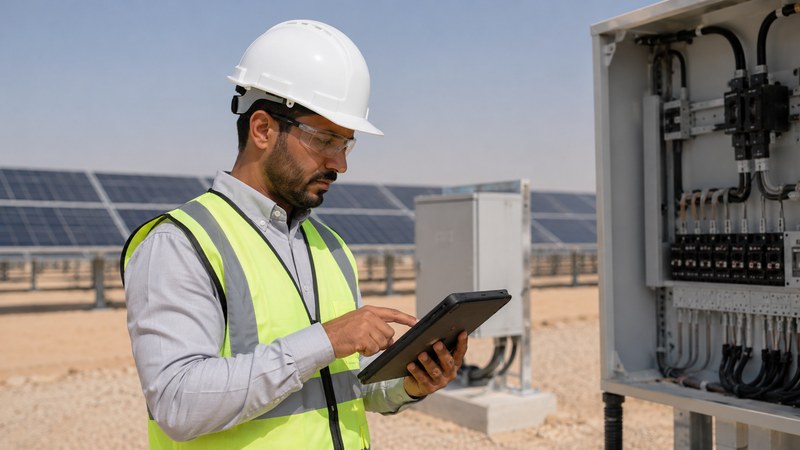
Yes, international specialists can work in the Saudi energy sector when an employer has an eligible role and the required work authorization is completed. For example, technical experience in power, EPC delivery, commissioning, specialized maintenance or large infrastructure can be useful. However, not every vacancy is open to foreign applicants.
Importantly, Saudization and localization policies affect hiring in engineering and technical professions. Therefore, employers may reserve or prioritize certain positions for Saudi nationals. International candidates should read the vacancy carefully, confirm eligibility with the employer and check current Ministry of Human Resources and Social Development requirements.
Work Visa and Employment Requirements
For an overseas candidate, the process normally begins after receiving an eligible employment offer. For example, depending on the role and circumstances, the process may involve a valid passport, employer-sponsored work authorization, an employment contract, educational certificates, degree attestation, a medical examination and professional registration.
Visa note: Visa and employment rules can change, so applicants should verify current requirements with the employer and official Saudi authorities. The Ministry of Human Resources and Social Development is an important official reference for employment rules.
Renewable Energy Jobs for Fresh Graduates
For example, graduates can target roles such as graduate engineer, junior electrical engineer, junior solar design engineer, trainee engineer, project coordinator, junior energy analyst, HSE trainee, site engineer or technician trainee. In addition, internship and structured graduate programs can provide a useful entry route.
First, build evidence of practical ability through university projects, internships or technical training. Next, learn relevant software and improve your CV. Additionally, develop professional English, follow major employers and maintain a complete LinkedIn profile. A graduate who can explain a real design, calculation or project contribution is usually stronger than one who lists software names without evidence.
Where Renewable Energy Careers May Be Based
For example, corporate, engineering and project-management positions may be found in Riyadh, Jeddah, Dammam, Al Khobar and other commercial centers. In addition, opportunities may relate to the NEOM region, the Eastern Province, Jubail, Red Sea development areas and renewable project zones elsewhere in the Kingdom.
However, many solar, wind and infrastructure roles are site-based. Candidates should check rotation patterns, accommodation, transport and remote-site conditions before accepting an offer. For broader location guidance, see our NEOM careers guide.
Types of Employers
For example, renewable-energy professionals may work for project developers, utilities, EPC contractors, engineering consultancies, solar companies, electrical contractors, energy-technology firms, industrial companies, government-linked project companies, project-management consultancies, O&M contractors and sustainability consultancies.
Instead, build a target list across several employer categories rather than applying only to famous brands. For example, an electrical engineer can search developers, EPC contractors, substations contractors and O&M providers. Consequently, this approach broadens the search without applying randomly.
How to Find Renewable Energy Jobs in Saudi Arabia
- Choose your target role. Decide whether you fit design, construction, commissioning, O&M, HSE, planning, sustainability or project management.
- Update your CV. Put relevant energy and project experience near the top.
- Highlight renewable-energy skills. Show software, systems, testing and project responsibilities with evidence.
- Search reliable job platforms. Use established portals and specialist recruitment sources.
- Check employer career pages. Apply through official channels where possible.
- Optimize LinkedIn. Use a clear headline, location preference and relevant technical keywords.
- Apply selectively. Prioritize roles where your experience matches the main requirements.
- Prepare for technical interviews. Review project examples, calculations, safety and troubleshooting.
- Verify the job offer. Check employer identity, salary structure, location and contract terms.
- Follow up professionally. A short, polite follow-up is better than repeated messages.
Related guides: jobs in Saudi Arabia for expats, engineering jobs in Saudi Arabia, how to find a job in Saudi Arabia from abroad and Saudi Arabia job opportunities.
How to Prepare a CV for Renewable Energy Jobs
First, start with a short professional summary that states your discipline, experience level and strongest energy or infrastructure capability. Next, list relevant projects, responsibilities, software, certifications, site work, commissioning, HSE exposure and project-management experience.
Where accurate, quantify your work using project size, number of systems, schedule improvement or maintenance results. However, never invent installed capacity, project value or responsibility. Also include your current location, notice period and availability when useful. For pay benchmarking before negotiations, review our Saudi Arabia salary guide.
Common Renewable Energy Job Interview Questions
- Tell us about your renewable-energy or power-sector experience.
- What experience do you have with solar PV systems?
- How do you approach a system-design or technical-review task?
- What safety risks are common on solar or electrical projects?
- How would you troubleshoot an underperforming PV system?
- Which project-planning or engineering tools have you used?
- How do you manage delays or technical interfaces on site?
- What commissioning activities have you supported?
- How do you coordinate with contractors, consultants and clients?
- Why are you interested in Saudi Arabia’s renewable-energy sector?
First, prepare factual examples from your own work. Therefore, a clear explanation of what you personally did is more credible than memorized answers.
Application Mistakes to Avoid
- Sending the same generic CV to every vacancy
- Applying for roles far outside your experience
- Keyword stuffing or copying job descriptions into the CV
- Using fake qualifications or inflated project claims
- Submitting a poorly formatted CV with missing contact details
- Ignoring application instructions
- Paying unauthorized recruiters for a “guaranteed” job
- Accepting vague offers without checking salary, location and contract terms
- Applying repeatedly to unrelated positions at the same employer
Before signing, read our guide to the Saudi employment contract and confirm any unclear term with the employer.
Job Search Safety
First, verify the company identity and recruiter before sharing sensitive documents. Next, check whether emails come from an official business domain and compare the vacancy with the employer’s career page. Importantly, never pay for a guaranteed job offer. In addition, be cautious if someone asks for money, banking credentials or unusual fees before a legitimate recruitment process is established.
Finally, review the employment contract carefully and keep copies of important correspondence. A professional recruiter should be able to explain the employer, role, location and recruitment process clearly.
Benefits and Challenges of Working in the Sector
Potential Benefits
For example, renewable-energy work can provide exposure to newer power technologies, large projects, international engineering teams, technical specialization and project-management responsibility. In addition, experience across construction, commissioning and O&M can strengthen long-term energy-sector capability.
Challenges to Consider
On the other hand, some roles involve remote locations, outdoor work, demanding schedules, strict safety rules and construction-site conditions. Moreover, specialist vacancies can be competitive. In addition, localization policies and contract-based employment can affect which positions are available to different candidates.
Future of Renewable Energy Careers in Saudi Arabia
Overall, the long-term direction points toward a more varied energy workforce. For example, solar and wind development, green hydrogen, storage, grid modernization, energy efficiency and sustainability require different technical skills. Therefore, professionals who combine a strong core discipline with newer energy knowledge may be well positioned for relevant opportunities.
Nevertheless, career decisions should be based on real vacancies rather than project headlines alone. Therefore, follow official project announcements, employer career pages and professional networks. Engineers should also monitor current registration and localization requirements. For related sectors, see our guide to construction careers in Saudi Arabia.
Frequently Asked Questions
1. Are renewable energy jobs available in Saudi Arabia?
Yes. Roles can appear in solar, wind, storage, sustainability, grid systems, EPC construction and operations. However, availability changes by project stage and employer. Therefore, search current vacancies and official career pages instead of assuming that every announced project is recruiting.
2. What are the most common renewable energy jobs in Saudi Arabia?
Common roles include renewable-energy engineer, solar PV engineer, electrical engineer, project engineer, technician, O&M engineer, HSE professional, planning engineer, QA/QC engineer, project manager and sustainability specialist.
3. Can foreigners work in renewable energy in Saudi Arabia?
Foreign professionals can work in eligible roles when an employer sponsors the required work authorization. However, Saudization rules affect engineering and technical hiring. Therefore, some positions may prioritize or require Saudi nationals.
4. What degree is best for renewable energy jobs?
Electrical, renewable-energy, mechanical, civil, chemical and energy engineering can all be relevant. However, the best degree depends on the role. Meanwhile, technician jobs may require a technical diploma or trade qualification instead of a bachelor’s degree.
5. How much do renewable energy engineers earn in Saudi Arabia?
Pay depends on the employer, responsibilities, experience, location and benefits. This guide does not quote a verified market range. Compare dated vacancies and salary surveys for similar roles, then confirm basic pay and allowances in the written offer.
6. Are solar energy jobs in demand in Saudi Arabia?
Solar development is an important part of Saudi Arabia’s energy diversification. As a result, solar-related skills are relevant across design, construction, commissioning and O&M. However, demand still changes with project awards, construction schedules and employer needs.
7. Can fresh graduates find renewable energy jobs?
Yes, especially through graduate engineering, trainee, site, project-coordination and junior analyst roles. In addition, graduates can improve their prospects by building practical project evidence, learning industry software and completing relevant technical training.
8. What skills are required for solar energy jobs?
Useful skills include PV design, electrical diagrams, power systems, AutoCAD, testing, commissioning, SCADA, preventive maintenance, HSE knowledge and project coordination. However, the exact mix depends on whether the role is design, site construction or operations.
9. Where can I search for renewable energy jobs in Saudi Arabia?
First, use established job portals, LinkedIn, specialist recruiters and official employer career pages. Next, apply selectively and verify the employer before sharing sensitive information or accepting an offer.
10. Do renewable energy jobs require engineering experience?
Many technical roles do. However, the sector also includes technicians, planners, HSE professionals, analysts, procurement staff and sustainability specialists. Therefore, match your education and experience to the actual job description.
Conclusion
Renewable energy jobs in Saudi Arabia span solar, wind, storage, green hydrogen, engineering, construction, operations and sustainability. The strongest applicants usually combine a relevant qualification with practical technical skills, clear project evidence and realistic job targeting.
Before applying, check the role carefully, tailor your CV and verify the employer. In addition, international candidates should confirm current localization, professional-registration and visa requirements. Finally, confirm basic salary, allowances and benefits in writing before accepting an offer. Explore the latest Saudi Arabia job opportunities and career guides on Gulf Career Group.
Authoritative references: Saudi Vision 2030 · Ministry of Human Resources and Social Development · Public Investment Fund renewable-energy context · Saudi Council of Engineers
Related articles

How to Answer “Why Should We Hire You?” With Real Examples
Learn how to answer 'Why should we hire you?' with a practical three-part formula, 12 realistic role-specific examples…
By Gulf Career Group · 21 min read
How to Improve English Speaking Confidence for Job Interviews
Improve English speaking confidence for job interviews with practical speaking exercises, truthful sample answers, workplace vocabulary, and a…
By Gulf Career Group · 20 min read
How to Handle Questions When You Don’t Know the Answer in an Interview
Don't know the answer in an interview? Learn what to say, when to ask for clarification, and how…
By Gulf Career Group · 18 min read
STAR Interview Method Explained: 15 Questions with Sample Answers
Learn the STAR interview method with 15 fictional sample answers for teamwork, problem-solving, accounting, IT and more. Practise…
By Gulf Career Group · 24 min read